
Telecom operators are expected to invest an average of $87 million in autonomous networks by 2030, according to Capgemini*. While much of the industry focus is on AI and automation, these investments raise a more fundamental question: what will those systems actually rely on to operate effectively?
Autonomous networks do not start with AI. They depend on a trusted understanding of the real-world state of telecom physical infrastructure. Without that, even the most advanced automation systems cannot operate with confidence. This is where many operators face a critical gap. Network data is often fragmented, delayed or disconnected from what actually exists in the field. As a result, there is a growing disconnect between system intelligence and physical reality.
At the core of every successful autonomous network strategy is a continuously accurate digital twin of the physical network. This trusted foundation ensures that AI systems operate on data that reflects real-world conditions, allowing operators to move from insight to reliable, scalable execution.
This article is the first in IQGeo’s Autonomous Networks series, exploring why the digital twin is a key pillar of autonomous networks and why data quality and governance must be treated as an ongoing system behavior, not a one-time cleanup project.

Autonomous Networks in Telecom Depend on Trusted Field Data
Autonomous networks require a reliable understanding of the real-world state of the network at all times. Without it, their ability to sense, interpret, decide and act with minimal human intervention is limited.
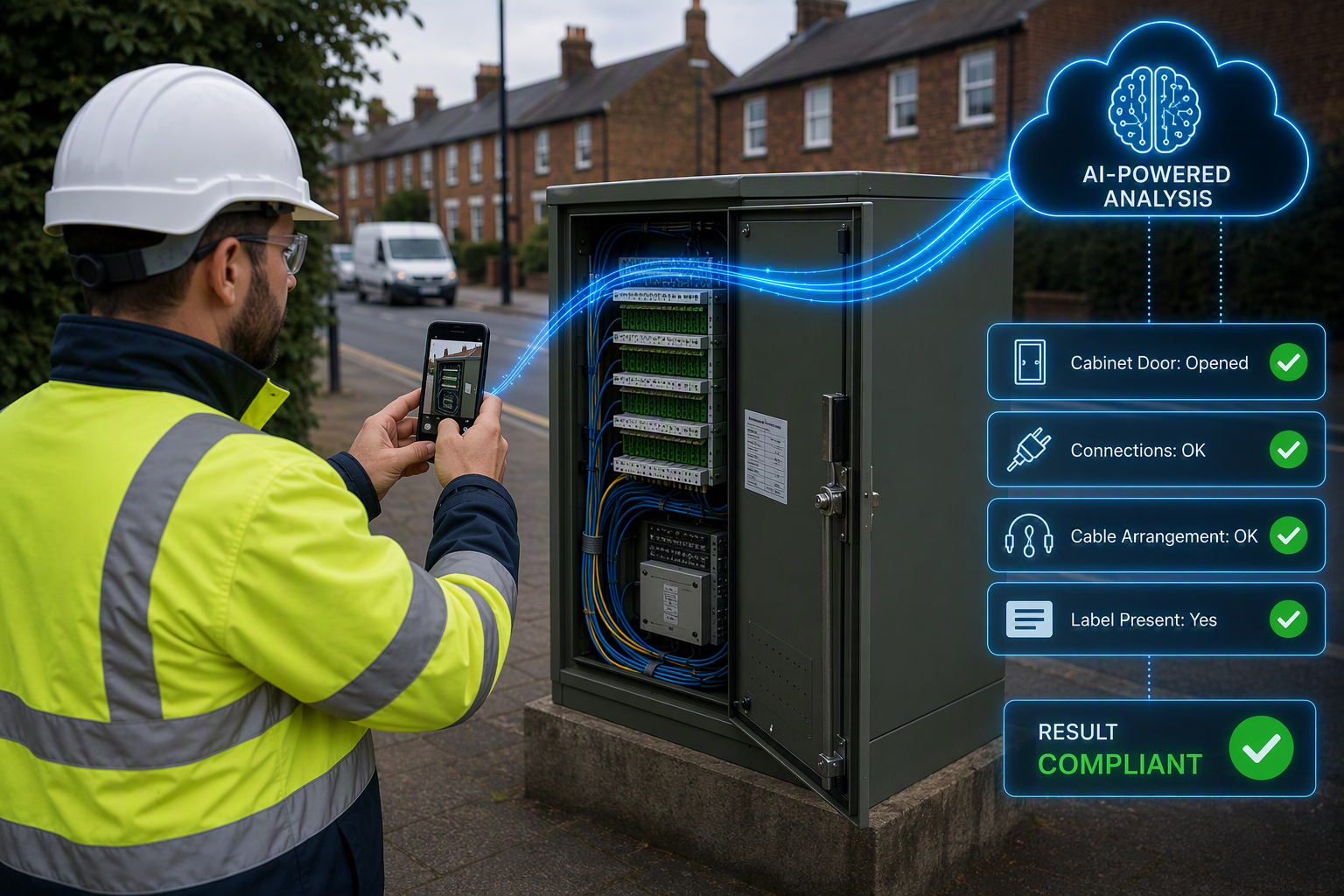
In many telecom environments, data about physical assets is still fragmented across systems, field updates are delayed or incomplete, and records drift away from reality over time. These issues combined create acritical gap between what the system believes and what actually exists in the field, leaving telecom operators with poor visibility into the condition of their physical network assets. The key issue with this is that process automation becomes fragile, as AI models make incorrect assumptions and workflows still require manual validation to check no data errors have entered the system.
This is why autonomous networks start with trusted field data. And that data must be grounded in a living telecom network digital twin that reflects the true operational state of the network.
The Digital Network Twin As the Foundation for Autonomous Networks in Telecom
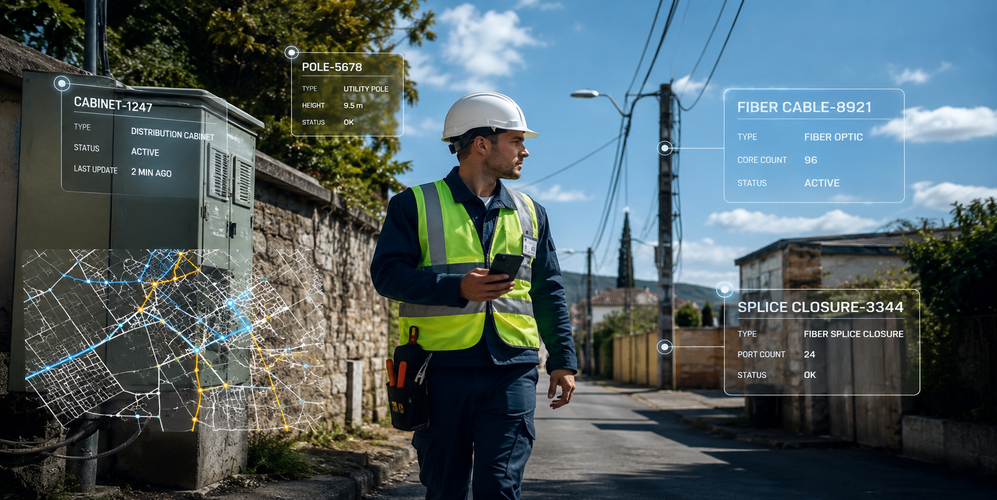
A telecom network digital twin is more than a system of record. It is a dynamic, continuously updated representation of the physical network across its entire lifecycle.
In the IQGeo platform, planning, design, construction, inspection and operations all work from the same shared model, ensuring that every change is captured and validated as it happens. The result is not just a static dataset, but a system that evolves alongside the network itself.
This distinction is critical. Traditional systems of record rely on periodic updates that capture what was true at a point in time. A network twin, by contrast, constantly aligns with real-world conditions through observability, improves through use and validation, and provides a single source of truth across teams and workflows. Every field interaction, whether building new infrastructure or maintaining existing assets, becomes an opportunity to capture current, real-world data and immediately synchronize those updates back into the network digital twin. This continuous alignment is what enables AI systems to operate with confidence. It is also why the telecom digital twin is the foundation of autonomous networks: it forms the basis for automation, closed-loop execution and AI-driven decision-making.
Autonomous networks operate across multiple layers, from physical infrastructure in the field to logical network control and service orchestration. While many industry solutions focus on automating the logical and operational layers of the network, those systems depend entirely on an accurate understanding of the physical infrastructure. IQGeo’s role is to provide that trusted, real-world network intelligence, ensuring that higher level automation systems operate on data that reflects actual field conditions.
Why Data Quality in Autonomous Networks Is Not a Clean up Project
Improving data quality is not a one-time project. It is a system behavior. Many operators attempt to solve their data quality deficit by launching large remediation efforts starting with data audits, cleansing programs and then migration initiatives. While these efforts may deliver short-term improvements, they do not address the root cause.
Data quality degrades because of how work happens:
- Field changes are not captured in real time
- Updates are performed manually, late and even inconsistently
- Verification occurs after the fact
- Systems are not connected to execution
As a result, even the cleanest dataset will begin to drift from reality as soon as work resumes. The only sustainable solution is to embed data quality into the operational fabric of the network. This means capturing data at the point of work, validating it automatically using AI, governing how changes are accepted and applied and ensuring every workflow contributes to data accuracy. In other words, data quality must be built into the system, not layered on afterward.
Data Governance as The Enabler of Autonomous Networks
If data quality is the outcome, data governance is the mechanism that sustains it. Data governance sets standards and policies for how data is collected, stored, and analyzed across the organization. For autonomous networks, data governance is not just about rules and compliance. It is about ensuring that every change to the network is controlled, validated, contextualized and actionable.
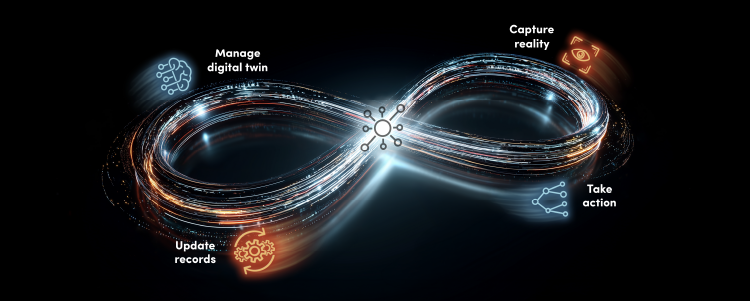
In the IQGeo approach, governed workflows play a central role. As field teams capture real-world conditions, AI validates what has changed. Workflows then determine how those changes are applied and trigger the next actions automatically. This creates a closed-loop system where data is continuously updated, actions are driven by trusted information and the network remains aligned with reality. This governed flow of data is what allows automation to scale safely.
Without governance, automation introduces risk. With governance, it enables autonomy.
Building Toward Autonomous Networks in Telecom
Autonomous networks require more than isolated investments in AI or automation. They depend on a trusted network digital twin that reflects real-world conditions, continuous data quality embedded into operational workflows, and strong data governance that ensures every action is based on accurate and validated information.
Together, these elements create the foundation for scalable, AI-driven automation and enable telecom operators to move from reactive operations to true autonomy.
See how IQGeo provides the trusted physical network intelligence that autonomous network systems depend on.
* “Networks with intelligence: Why and how the telecom sector should accelerate its autonomous networks journeys” - Capgemini report, 2024
 Previous