
Smart meter installation software with visual AI capabilities enables utility operators to capture and document more details about their assets and provide real-time feedback to installers in the field to ensure that each installation is done right the first time.
Utility providers that want to increase efficiency and ensure their smart meter rollout projects put them ahead need to begin operational transformation in the field. With green energy objectives and ambitious grid modernization goals on the table, today’s smart meter rollouts demand high-volume and high-velocity from utilitiy operators. Legacy field workflows and software don’t have the functionality technicians need to effectively document and verify their work at scale, leaving gaps in quality assurance (QA) and quality control (QC) that lead to greater costs down the road.
Technicians want to focus on using their skillsets to complete their work safely, quickly, and correctly, not filling out form fields and waiting on site for QA/QC validation from the back office. Utility providers can unlock greater efficiency with visual AI tools that empower technicians to get their job done faster, and more effectively, eliminating frustrating (and expensive) rework.
In this article, I’ll discuss how utility operators can use visual AI for smart meter installation to automate aspects of the installation workflow, improve QA and QC and transform the way they document and manage their smart meter rollout over time.
Why Today’s Utility Providers Need Smart Meter Installation Software to Meet Demand and Strengthen Field Operations
Today’s utility providers have a rapidly expanding smart meter inventory that they must now monitor, manage and in some regions, completely replace. In markets that haven’t yet met penetration targets, utilities are under pressure to close gaps, work quickly and recoup investment as fast as possible. Meanwhile, utility operators in mature markets are starting to look at upgrading the smart meters customers are already using.
Projections in the EU27+3 market predict that 80% of electricity and gas customers will have a smart meter by 2029. With nearly all customers covered, Italy and Sweden (the first- and third-largest markets respectively) are both completing second-generation smart meter rollouts. In 2023, Italy installed 5 million units, while Sweden installed 1.5 million.
Coming in second place, the UK installed 3.5 million smart meters, bringing the coverage rate to 61%. Over the last three years, utilities in the UK have faced challenges with rollout velocity and adoption rates. As 2G and 3G networks are phased out in the coming years, providers need to upgrade over 7 million smart meters to new ones that are compatible with 4G and 5G networks.
In the US, utility providers achieved an 82% penetration rate in 2024 with a 91% penetration rate projected by 2030—growth that will be largely driven by investor-owned projects. Already a mature market, Canada is anticipated to achieve a 97% penetration rate by the end of the decade.
Legacy QA/QC Processes are Holding Utility Providers Back
When technicians and, most often, contractors are working at this scale, maintaining QA/QC and thorough documentation procedures can be a challenge. For example, in the UK, over 3 million smart meters (9%) were not functioning after installation and about half of those had resolvable issues that required rework.
Installation is one of the most expensive parts of a smart meter’s lifecycle. Utility teams need to keep the cost of every installation low while capturing the documentation they need to keep the assets working properly for years to come. That’s where we see a strong use case for smart meter installation software and visual AI technology like NetLux AI.
Reducing Risk and Lowering Costs with Right-First-Time Smart Meter Installation
Getting smart meter installations done right the first time increases rollout velocity and time-to-value while reducing labor costs—in both the field and back office—and expensive truckrolls for rework. But today, the process utilities teams go through to ensure installations meet their strict standards are time-consuming and costly. Despite implementing thorough QA/QC requirements, many jobs still slip through the cracks. Our customers tell us that up to 10% of installations have some kind of issue or problem that requires rework.
Even when an installation is done correctly, current workflows for documenting installations leave gaps in asset records that limit visibility into the condition of the grid and cause issues reporting on, monitoring and maintaining it over time.
Right now, most utility operators rely on slow, manual processes for QA/QC and asset documentation during installations in the field. Typically, technicians install the smart meter, take photos before and after installation and send them to the back office. This process produces a massive volume of images and the team simply can’t assess all of them. IQGeo customers tell us that they only check about 10–15% of their smart meter installations through this type of workflow.
Bitesize Electric Podcast: Smart Meter Installation
In some cases, installers wait on site to receive feedback from the QA/QC team. This puts pressure on the QA team to work faster, increasing the risk of human error. It also means that the engineering team can’t go onto the next site until their work has been approved. This lengthens the smart meter rollout timeline, which has a domino effect on time from installation to billing and ultimately makes the installation project more expensive.
Another issue is that even if QA/QC teams communicate photo standards to technicians and contractors, there’s no guarantee that all the images will be clear, well-lit and contain the information they need to assess the quality of the installation. At best, the QA/QC team has to go back and forth with the engineer to get different photos, which takes time. At worst, the images aren’t checked at all and, if the photos are loaded into the asset’s record, they’ll live on in the system as useless data
How Visual AI Ensures Right-First-Time Smart Meter Installations
Traditionally, only 10–15% of smart meter installations undergo manual quality checks, leaving utilities exposed to compliance risks and costly rework. With failure rates between 6–10%, even minor process errors can lead to repeat visits and increased costs. Visual AI changes the game by providing real-time, on-site feedback to installation crews, ensuring issues like incorrect wiring or missing documentation are caught instantly - not days later in the back office.
NetLux AI from IQGeo enables 100% digital QA/QC, creating a full audit trail with timestamps and installer details. Utilities have reported up to a 25% reduction in audit/reporting time and a dramatic improvement in “right first time” installations; from 90–94% up to 99%. This not only reduces non-compliance costs (with each truck roll costing around $200) but also redeploys back-office staff to higher-value tasks.
Beyond meter installs, visual AI is already automating inspections, damage assessments and asset management, paving the way for proactive, data-driven utility operations. As AI becomes embedded in field workflows, the vision is clear: smarter, safer and more efficient utilities for the future.
What is Visual AI for Smart Meter Installation?
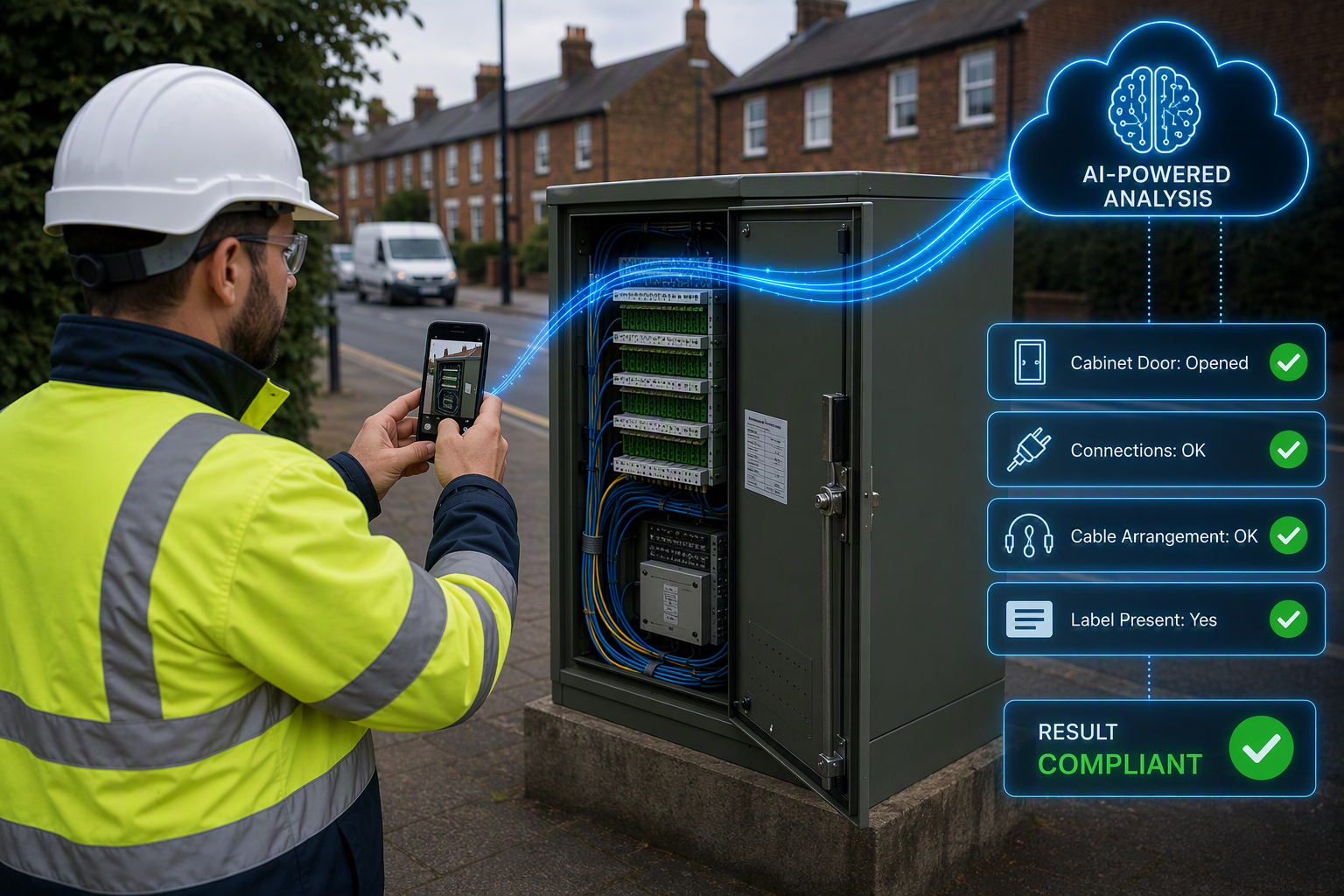
Visual AI is a technology that can be used to perform AI‑powered quality inspection for utility meter installations. With visual AI, QA/QC checks happen in seconds so that installers can make fixes in the moment and move on with their work.
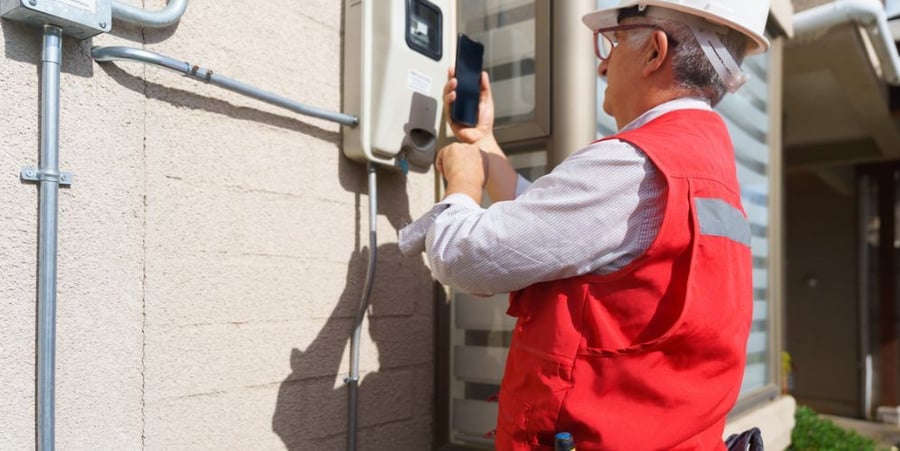
Technicians can use visual AI software on their tablet or phone to take a photo of the smart meter. AI automatically detects whether the image contains the information the system needs to perform the check. Then it scans the image for relevant information such as the type of asset, its location, the asset ID, the starting meter read and polarity test results.
The system flags any issues it detects and provides real-time feedback to the engineer who can then take action immediately. They can simply take another photo to verify that the fix has been made and that it has been done correctly. All of that information is logged, giving a complete record of the smart meter’s installation process.
Hear how Unit-T is driving efficient smart meter installation with AI
Benefits of Using Visual AI for Right-First-Time Smart Meter Installation
Visual AI embeds QA/QC into the installation process itself. Utilities can go from manually checking just one in ten smart meter installations to verifying and documenting 100% of their smart meter assets. This eliminates the need for rework, which has a host of benefits, from lowering costs to improving efficiency and limiting service interruption for the customer. As a rule of thumb, every truckroll costs about $200 in the US, €200 in Europe or £200 in the UK. If you’re installing 10,000 smart meters each month, with a 10% rework rate, that’s a $200,000 savings.
Utilitiy providers can also realize cost savings in the back office. AI-driven workflows take the burden off of QA/QC teams so that they can focus on high-risk or complex issues that require human intervention. With AI handling repetitive, manual checking QA/QC talent can be redeployed to value-added roles elsewhere in the business.
Streamline Reporting and Audits with Centralized, High-Quality Data
This digital, AI-enabled workflow also generates an audit-ready trail of data. Smart meter installation compliance software makes it easy to see whether an asset passed every QC check, who installed or serviced the meter and when work was completed. With high-quality images, you can also look into the state of your assets any time from the back office. Down the road, this centralized, digitized database streamlines reporting and makes it easier to navigate audits when the time comes. The smart meter installation team at Unit-T used IQGeo’s visual AI solution, NetLux AI, to cut down reporting time by 25%. Better data and greater data accessibility also makes it possible to use the information you get from the field to make business decisions and enhance operational efficiency on a regular basis.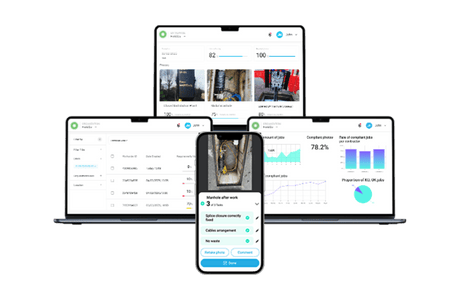 For example, with the NetLux AI dashboard, your team can get insight into the overall state of your assets. Beyond insights into your grid, this information helps you understand the performance of your own installers or your contractors and the efficiency of your QA/QC process. NetLux AI also enables you to search for any asset by its ID, job number, location, or installation date and view its entire history, including what controls the asset passed or failed alongside logged images. This data allows you to spot gaps and identify opportunities for improvement on a per-asset basis.
Going Beyond the Smart Meter Installation Software Use Case: Asset Inspection and Management
Beyond smart meter installations, utilitiy teams can use visual AI to support ongoing asset monitoring and management. Whether they’re completing an inspection, a damage assessment or creating an as-built, technicians are already taking a lot of photos. Visual AI makes those photos more useful and more valuable.
Collect and Record an Asset’s ID and Details About Its Condition in Seconds
Visual AI solutions like NetLux AI use optical character recognition (OCR) to detect serial numbers or nameplate information and automatically populate forms technicians use when they’re performing assessments. This cuts down on manual data entry and reduces the risk of errors.
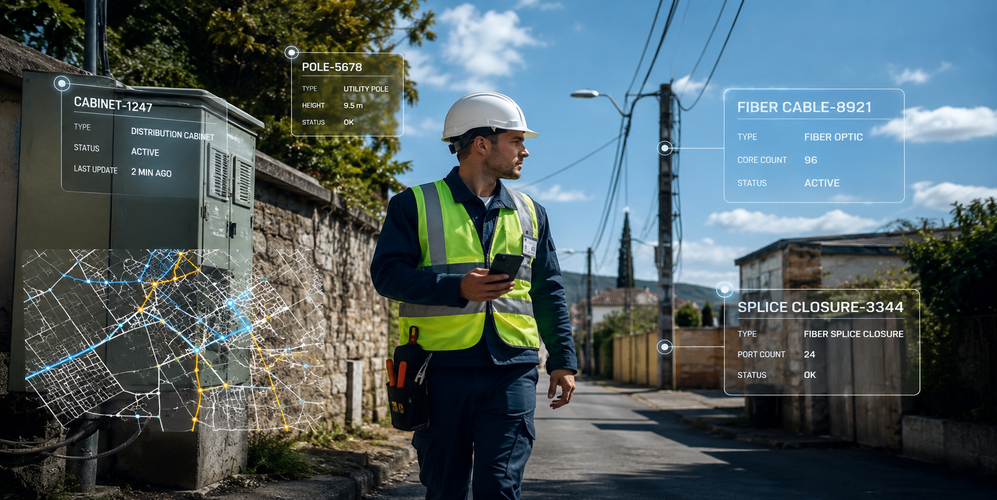
NetLux AI can be trained to analyze photos to identify and document key details about an asset’s condition. For example, if a technician is out taking photos of electrical poles, the NetLux AI system can recognize whether a pole is leaning, if there are woodpecker holes or corrosion, or if there’s vegetation encroachment. It can then automatically populate the inspection form with that information as well. The technician can then verify the information and add more details if they need to.
Get a Complete Picture of Asset Performance Over Time
As technicians conduct assessments over time, you get a complete digital record of each asset’s lifecycle. That data can be used to understand how different assets are performing, what problems tend to arise first and how long assets last. This enables you to make more proactive decisions about preventative maintenance and the materials or installation standards you’ll use going forward. You can also track which individuals or contractors worked on each asset, giving you insight into which teams do the best work.
With a smart meter rollout software solution like IQGeo and NetLux AI, utilities can generate an extremely detailed picture of their grid by combining photos taken by technicians with drone images as well as Lidar data and geospatial information.
Technicians and installers can easily access all of this information right from their tablet or phone, so they know exactly what they need to look for when they’re performing inspections, maintenance, or post-disaster remediation. This helps them perform fixes and assessments right the first time—once again reducing truckrolls for rework. It can also enhance safety by giving field crews a view into potentially dangerous issues with the asset and any obstacles or other critical infrastructure that might be in the surrounding area before they even get to the worksite.
Explore the Possibilities of Visual AI Technology for Smart Meter Installation and More
Listen to my conversation with Brandon Curkan on the Bitesize Electric podcast for a deep dive into how NetLux AI technology works with existing utilities software and fits seamlessly into the workflows technicians already use to carry out smart meter installations, ensuring they get the job done right the first time. We also discuss how visual AI technology can support the future of digital asset management and introduce a new level of insight and efficiency to utilitiy operations.
 Previous