Autonomous networks are the natural evolution of how telecom and utility operators manage increasingly complex physical infrastructure at scale. They are networks that can sense, interpret, decide and act with minimal human intervention, while remaining safe and governed.
The journey toward autonomous networks is progressive. TM Forum defines six levels of network autonomy, from Level 0 (fully manual) to Level 5 (fully autonomous). This framework provides organizations that manage networks a shared language to describe where they are today and how they plan to progress toward higher levels of autonomous network operation.
| Level of Network Autonomy | Description |
|---|---|
| Level 0 Manual operation |
All network operations are human-driven.
|
| Level 1 Assisted operation |
Systems begin to assist humans with basic automation.
Operators use automation to reduce workload, not to replace decision-making. |
| Level 2 Partial autonomy |
The network can execute predefined actions under supervision.
|
| Level 3 Conditional autonomy |
The network can make decisions and act independently within defined boundaries.
This level depends on trusted data and accurate digital twins of the physical network. |
| Level 4 High autonomy |
The network is largely self-managing.
Operators shift from operating the network to supervising intent, policies and business objectives. |
| Level 5 Full autonomy |
The network becomes fully autonomous and self-evolving.
Networks effectively run themselves, powered by real-time data, AI and closed-loop intelligence. |
Telecom operators are moving toward autonomous networks because the scale, speed, and complexity of modern infrastructure - driven by fiber expansion, 5G deployment, and rising customer expectations - can no longer be managed through manual processes. Traditional operations rely on fragmented systems, outdated data, and human intervention, creating delays, rework, and high operating costs.
Utility operators, on their side, face similar challenges, but with added pressure from safety, regulatory compliance, and the transition to more distributed and dynamic infrastructure such as smart grids and renewable energy sources. Aging assets, increasing demand, and stricter reporting requirements make accurate, up-to-date network data critical.
At IQGeo, we believe that making critical telecom and utility infrastructure intelligent is essential to support long-term social and economic progress. Without a move toward autonomous networks, operators will struggle to scale, face rising operating costs, and limit their ability to meet demand and sustain growth.
The industry has already undergone significant digital transformation. However, recent advances in agentic AI enable operators to move beyond alert-centric systems and rigid rule-based automation that can no longer keep pace with the complexity and variability of physical networks.
IQGeo takes a practical, AI-first approach to autonomous networks, built as a continuous loop that brings together trusted network data, governed operational workflows, and domain-specific AI. This closed loop ensures that decisions are always based on accurate, current, and validated information, which is essential for safely increasing network autonomy.
IQGeo leadership team: Lola Le Fur - Chief of Staff, David Cottingham - CTO and Raf Meersman - CCO explain how IQGeo is advancing autonomous networks with data, AI and digital twins.
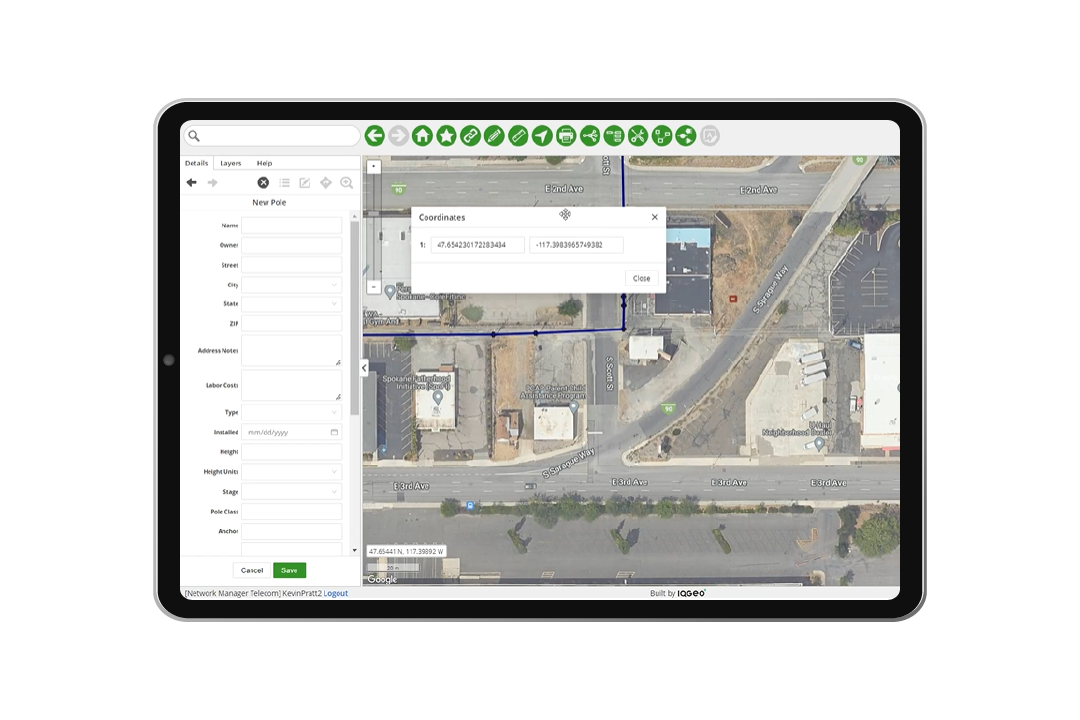
IQGeo maintains a living network twin that reflects how the physical network exists in the real world. We enable field teams to reliably capture network conditions as work is performed to make sure any change in the field is automatically reflected in the network twin. Data quality is no longer dependent on delayed reconciliation or manual updates after the fact.
Telecom and utility operators move away from a rigid system of record that quickly becomes outdated. Instead, they operate from a continuously governed digital twin that stays aligned with reality, creating a trusted foundation for automation, analytics, and AI-driven decision-making.
IQGeo’s AI is domain specific and embedded directly into operational workflows. It interprets change on the physical network, validates outcomes and learns continuously from real-world execution, making network autonomy safer as operations go. This makes AI not only an engine for autonomy, but also an active guardian of data quality and governance.
By continuously learning from real-world execution, IQGeo’s AI builds confidence in both the data and the decisions derived from it. This embedded governance ensures that only trusted, policy-compliant data feeds autonomous operations, making increased autonomy safer and more predictable over time.
Insight only creates value when it leads to action. IQGeo workflows orchestrate execution across planning, design, construction and operations, and feed the results back into the network twin. This orchestration closes the loop that turns AI decisions into actions, while continuously strengthening the quality and reliability of the underlying data.
By closing this loop, IQGeo turns the operating systems of telecom and utility organizations into learning engines that decide, act, and continuously improve.
As data quality, governance and AI confidence increase, networks require less human intervention to operate. Over time, operators move steadily toward higher levels of autonomy, with trust built on a foundation of accurate data, governed processes, and proven execution.

IQGeo enables telecom and utility operators to implement concrete solutions that pave the way for autonomous networks. We address specific, added-value use cases at each stage of the network lifecycle, with the objectives to keep the network twin accurate and aligned with physical reality and allow fast, intelligent execution in the field.
| Optimzed Network Design | Construction Management | Fiber Installation | Asset Audit |
| Deliver build-ready fiber design, automatically | Build fiber networks faster, cut rework, and deliver accurate as-built data | Use AI to automate fiber installation acceptance | Detect, map and inventory poles on your network |
| Field Design | Digital As-Built | Meter Installation | Asset Inspection |
| Allow teams to create accurate network design in the field | Empower field crews to update as-builts in real-time | Streamline meter installation and quality compliance processes with AI | Monitor asset condition automatically to streamline maintenance programming |
IQGeo helps telecom and utility operators progress toward autonomous networks while delivering tangible business outcomes today.
For Telecom Operators
Faster rollout and time to revenue through automated planning and execution
Improved network data quality and governance, increasing serviceability confidence
Reduced rework and operational costs through AI‑validated field activity
Scalable operations
For Utility Operators
Trusted asset visibility across complex, aging infrastructure
Right-first-time field execution with AI-supported guidance and validation
Improved resilience through real‑time network observability
Lower operating expenses through intelligent, repeatable workflows
Across both industries, IQGeo enables operators to move from reactive operations to proactive, intelligence-driven execution.
|
|
 |
 |
|
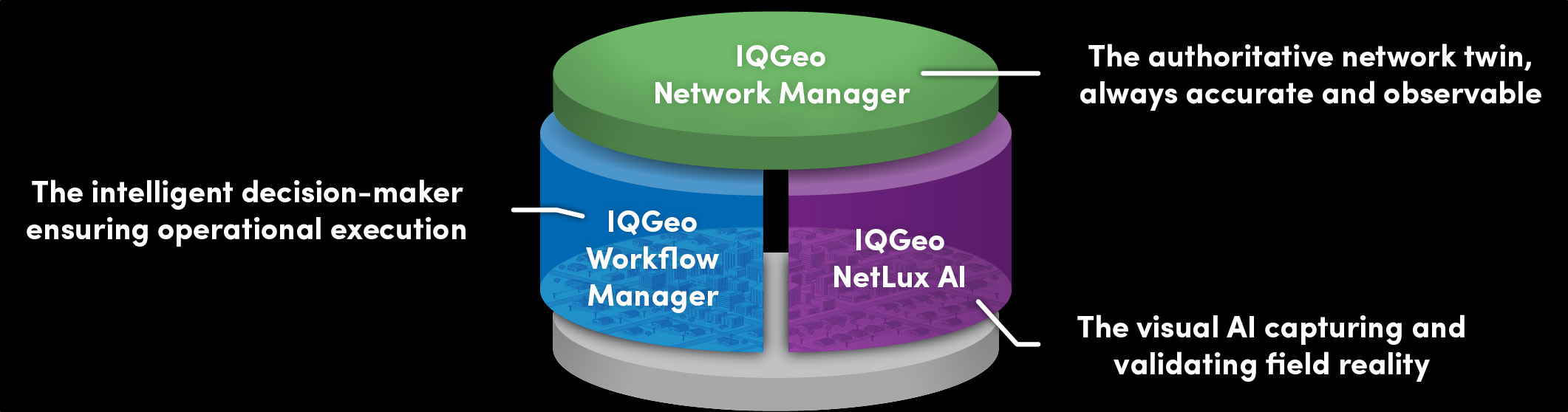
Network Manager The authoritative network twin for telecom, electric and gas networks, always accurate and observable. |
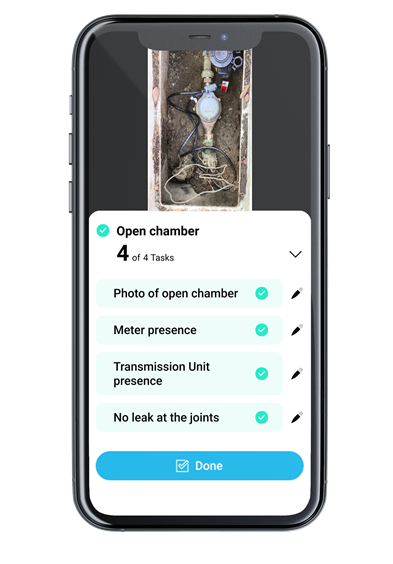
NetLux AI The visual AI that captures and validates field reality. |
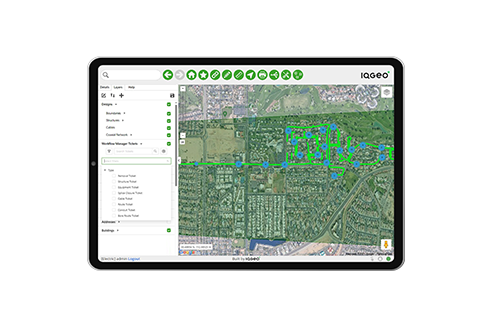
Workflow Manager The intelligent decision-maker ensuring operational execution. |
Explore the stories of customers that have been trusting IQGeo to increase their level of operational intelligence and network autonomy.
IQGeo definitely has some massive capabilities and potential to increase efficiency even more than what we’re doing now.

Kris Boccio, Senior Director of GIS & Records, Lightpath
It [NetLux AI] not only improves construction quality, it enhances the customer experience thanks to a higher rate of correctly completed work ("first-time-right") and fewer rework. Direct feedback allows installers to learn independently and continuously, contributing to cost savings.

Ralf Gugelmann, Head of Rollout, Maintenance & Single Project, Swisscom