
As fiber networks scale, operators are experiencing increasing friction across planning, build and operations.
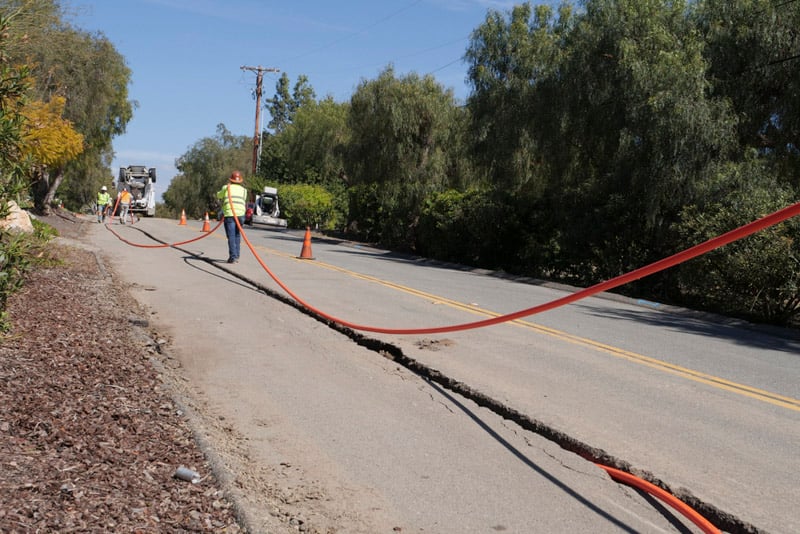
Field work is completed before it is fully validated. Issues surface after crews leave site. Network records drift from real world conditions. Rework increases. Make ready schedules slip. Confidence in automation erodes as teams struggle to trust the data it depends on. This operational friction has become part of routine network delivery.
At the same time, expectations continue to rise. Networks must be built faster, operated more efficiently and scaled without adding risk or headcount. AI and automation are essential to meeting these demands, but they only deliver value when the network data foundation is accurate, current and connected to how work actually happens.
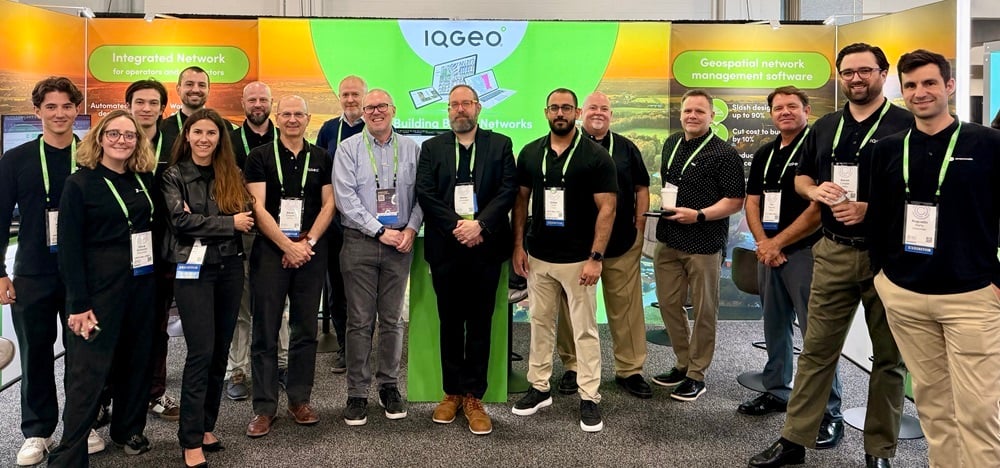
At Fiber Connect, IQGeo is bringing together a set of practical capabilities designed to address this reality and pave the way for autonomous networks by keeping the network twin aligned with real world conditions. Together, these capabilities show what it takes to move from aspiration to execution and create the disciplined foundations required for autonomous networks:
-
An accurate network twin that stays continuously aligned with real world conditions
-
Visual AI that validates field work as it happens and prevents data drift
-
Mobile intelligence that governs change at the point of work
-
Infrastructure insight that scales planning, make ready and execution
-
Controlled migration that removes friction without disrupting operations
Why Do Autonomous Networks Start With an Accurate Network Twin?
There is no autonomy without clean, trusted network data.
AI driven networks depend on an accurate understanding of the operational state of the physical network. When records drift from reality, planning slows, builds require rework and service activation is delayed. Automation becomes fragile rather than reliable.
IQGeo is addressing this challenge by building an AI first network intelligence platform designed as a system of action.
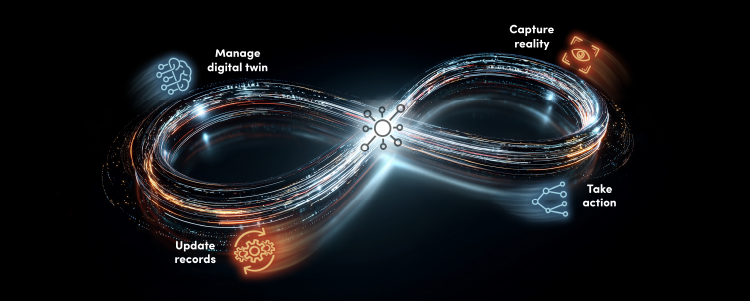
Planning, design, construction, inspection and operations all work from the same shared network twin. AI and governed workflows detect, validate and resolve change as work happens. The network twin improves through use and becomes more reliable over time. This continuously aligned network twin creates the conditions required for higher levels of automation and autonomy.
Turning Reality Into Action With Visual AI
One of the most important building blocks in this journey is IQGeo NetLux AI.
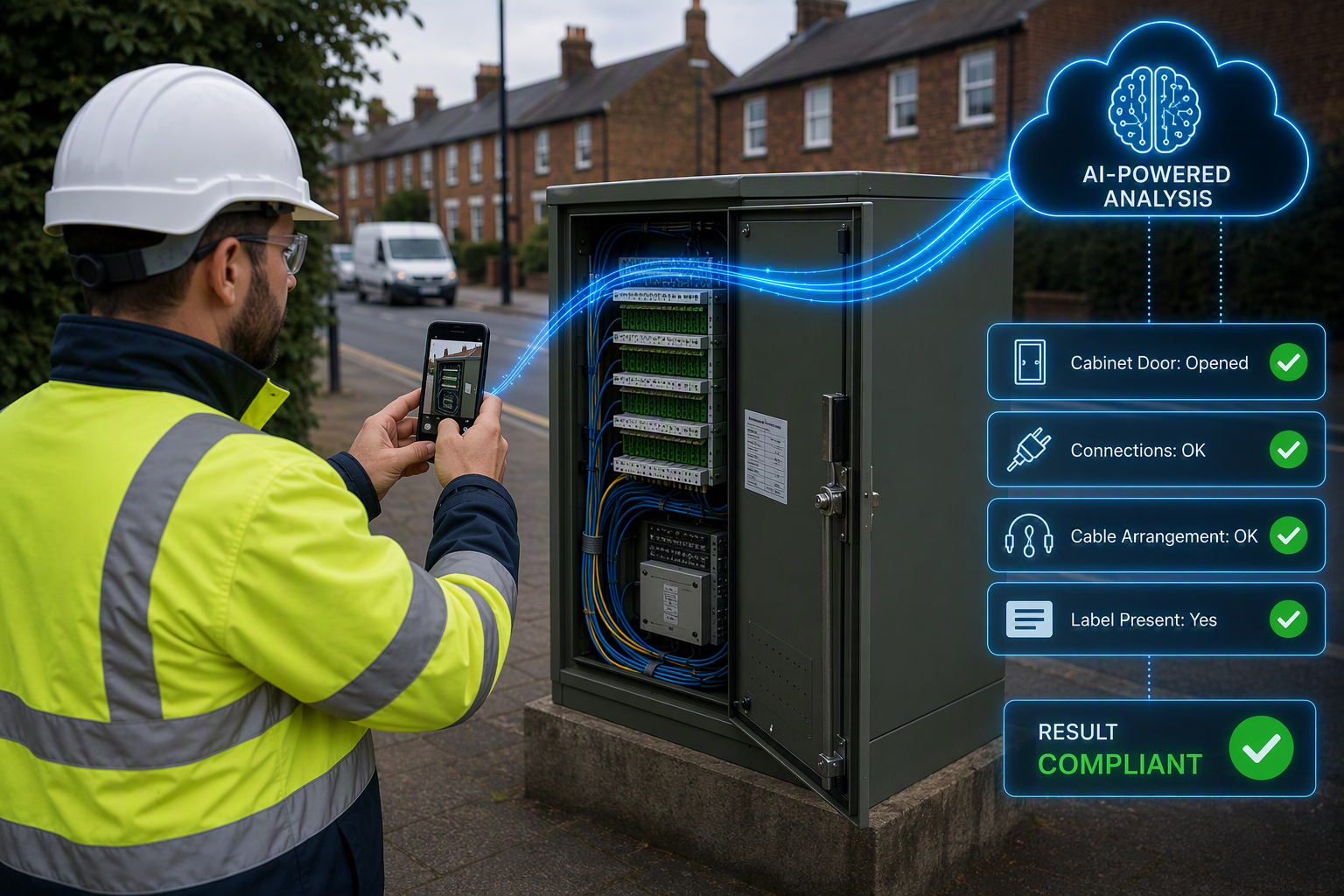
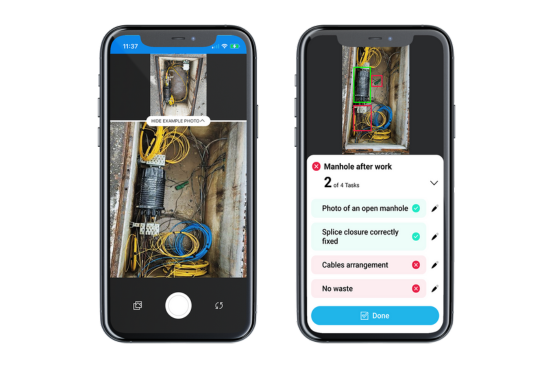
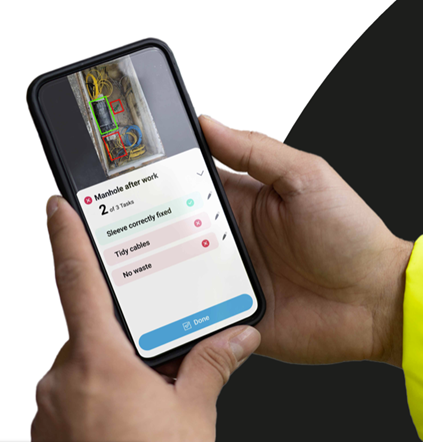
In many networks, quality checks occur after field work is completed. Documentation is reviewed once crews have left site. Errors emerge when rework is already unavoidable. Network records drift even when teams follow established processes. NetLux AI addresses this challenge by capturing real world conditions in the field through photo analysis and validating work as it happens. Issues are identified on site. Documentation quality improves immediately. The network twin remains aligned with reality.
By validating change at the point of work, NetLux AI keeps the data foundation clean and ready for automation across the network lifecycle. At Fiber Connect, IQGeo is demonstrating how NetLux AI enables intelligence to drive outcomes across the network lifecycle.
Putting Intelligence Where Work Happens
Another major milestone being previewed at Fiber Connect is the next generation of mobile app for field workers.
Mobile has long been a weak point in the network lifecycle across the industry. IQGeo has led with mobile first network applications for years, giving field teams direct access to the network twin where other platforms relied on disconnected tools and delayed updates. The next generation builds on that foundation, extending intelligence, validation and governance directly into field work.
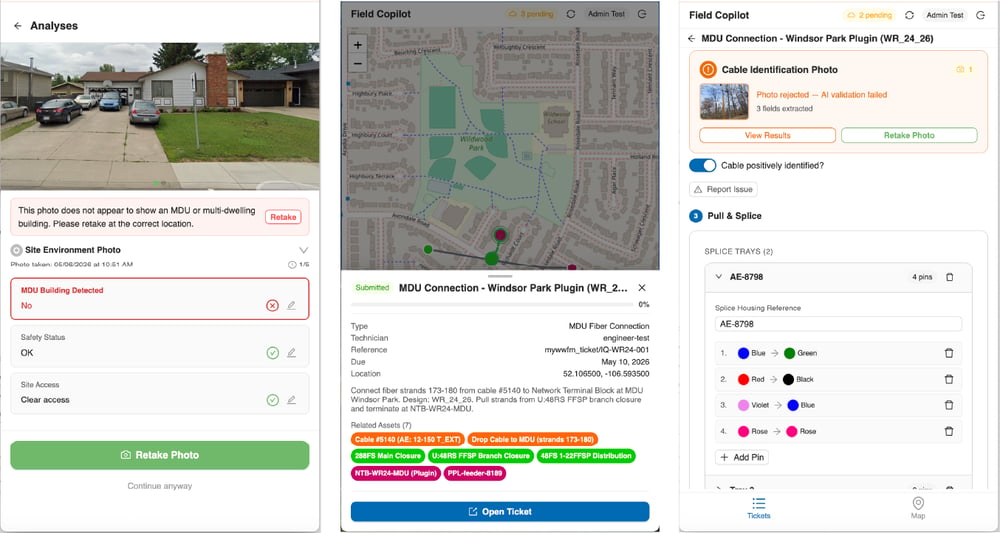
The network twin, visual AI and intelligent workflows are unified in a single integrated mobile environment that actively guides, validates and governs field work. Field work is validated at source. Real time photo analysis provides immediate feedback. Intelligent workflows govern acceptance. Updates flow directly into the network twin without rework.
With intelligence applied directly where work happens, field activity becomes the control point for data quality. For operators focused on scaling without increasing operational risk or headcount, this shift is critical.
Managing Physical Reality at Scale With Pole Intelligence
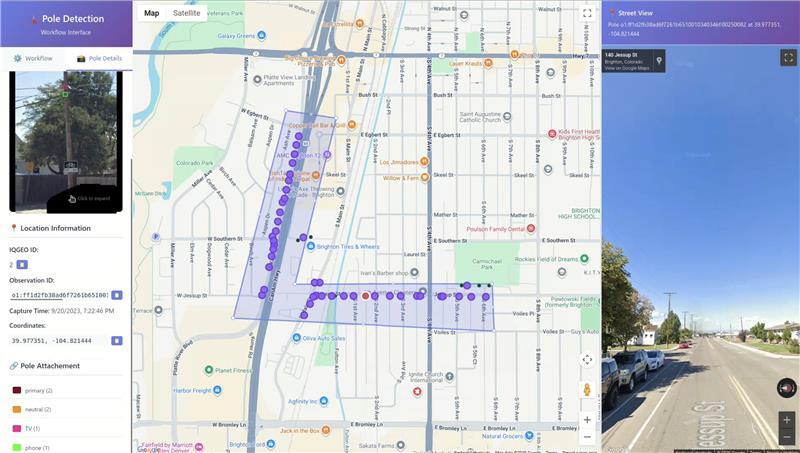
Accurate network twins extend beyond fiber routes and splices. They depend on understanding the physical infrastructure that constrains and enables growth. Pole data remains one of the biggest bottlenecks to network expansion. Manual surveys, fragmented imagery and spreadsheets fall out of date quickly, driving make ready delays, rework, risk and missed revenue.
At Fiber Connect, IQGeo is showing how AI powered Pole Intelligence uses imagery, AI and field verification to keep pole records aligned with real world conditions at scale. Manual audits are reduced. Visibility improves. Planning and make ready decisions become faster and more reliable.
Clean, trusted infrastructure data strengthens confidence today and supports automation tomorrow.
Removing Barriers to Progress With Controlled Migration
For many operators, legacy systems slow progress toward accurate, trusted network data. Platform change has historically introduced disruption, risk and cost. This reality slows transformation even when teams recognize the need to modernize.
At Fiber Connect, IQGeo is also showing how fast, controlled migration enables operators to move to the IQGeo Platform using AI driven automation that improves accuracy from day one while keeping teams productive and operations stable.
Migration provides access to a platform designed for governed execution, continuous validation and an accurate network twin without forcing disruptive change. For fiber operators ready to move forward, migration becomes a practical enabler.
Join Us at Fiber Connect
Everything IQGeo is showcasing at Fiber Connect serves one purpose: paving the way for autonomous networks.
-
An accurate network twin
-
AI that validates reality
-
Mobile intelligence that governs change at source
-
Infrastructure insight that scales
-
Controlled migration that removes friction
Autonomy is built on disciplined foundations.
If you are evaluating how to move toward autonomous networks without increasing operational risk or headcount, Fiber Connect is an opportunity to see how accurate network data, visual AI and governed execution make automation practical today.
We invite you to join us at Fiber Connect to see how IQGeo is paving the way for autonomous networks, one practical step at a time.
Can’t make Fiber Connect? We’d still love to show you what we’re previewing. Get in touch to book a demo or learn more.
Frequently Asked Questions About Autonomous Networks
What Prevents Fiber Networks From Becoming Autonomous?
Fiber networks are prevented from becoming autonomous when the digital view of the network no longer reflects physical reality. Data drift, delayed validation, fragmented workflows and manual quality checks undermine trust in network records. Without trusted, continuously updated network truth, AI and automation become risky rather than reliable and operators are forced to retain manual control.
How Does Visual AI Improve Fiber Network Data Accuracy?
Visual AI improves network data accuracy by validating work as it happens in the field. By analyzing photos at the point of execution, visual AI detects errors, incomplete work and documentation issues before crews leave site. This real‑time validation keeps the network twin aligned with real‑world conditions and prevents data drift from entering downstream systems
Why Is Mobile Intelligence Critical for Automation?
Mobile intelligence is critical because the field is where network change actually occurs. When intelligence, validation and governance are embedded directly into mobile workflows, changes are captured, checked and approved at source. This turns field activity into a control point for data quality and enables safe closed‑loop automation across planning, build and operations.
How Does IQGeo Support Fiber Operators with the Move Toward Autonomous Networks?
IQGeo supports the move toward autonomous networks by delivering an AI‑first Network Intelligence Platform that combines a continuously accurate network twin, domain‑specific AI and orchestrated workflows. By validating change as work is performed and feeding outcomes back into the network twin, IQGeo enables fiber operators to move from static records and manual control toward safe, scalable autonomy grounded in real execution.
Short definitions of the core concepts referenced in this post.
Autonomous Networks
Networks that continuously understand the real operational state of the physical network and use closed‑loop automation to act on change with minimal manual intervention.
Network Twin
A living digital model of the physical network that stays continuously aligned with real‑world conditions and provides trusted network truth for AI and automation.
Visual AI
AI that analyzes field‑captured images to validate work quality, confirm as‑built accuracy and detect mismatches between physical assets and network records.
Pole Intelligence
The use of imagery, AI‑assisted analysis and field validation to keep pole and attachment records accurate at scale and support faster, lower‑risk make‑ready decisions.
System of Action
A platform layer that does more than store data by actively structuring, governing and driving work through workflows so execution outcomes feed back into the network twin.
 Previous